

Lean in. I’ll let you in on one of the best-kept secrets in the SEO universe.
Many businesses do not need SEO. At least not right away.
I know that’s not probably what you have heard from agencies before.
Hence, every year, we see hoards of business owners throwing money at SEO agencies and walking right off a cliff, convinced it’s Google’s wishing well.
Many of us are made to believe SEO works like ads – you pump in money, and leads magically start rolling in.
I am sorry to break it to you. SEO doesn’t work just because you want it to.
It works when your business’s offerings (product-market fit) align with what people are already searching for (search demand).
That, my friend, is SEO Market Fit. A concept that should be blindingly obvious, but sadly, not.
You can optimize your site until Google tattoos your domain on its forehead, and it still won’t move the needle if there’s no demand for what you’re offering.
Finding SEO Market Fit Instead of SEO Money Pit
If you’d never dreamed of selling snowboards in the Sahara, you know what product-market fit is.
It’s the degree to which a product satisfies a strong market demand.
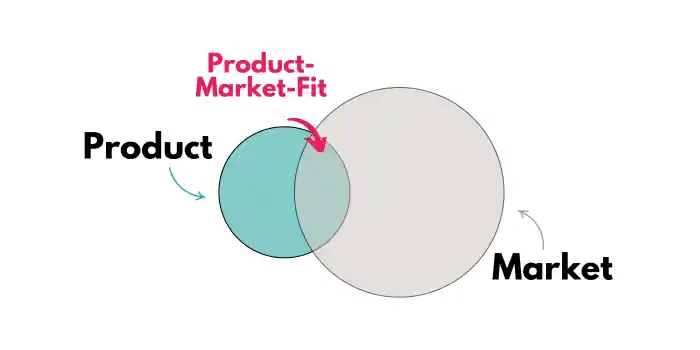
Product market fit is when a product satisfies a market need.
Now, within every Market exists Search Demand. This is the chunk of your market actively searching anywhere online for a problem or solution, even remotely related to your offering.
The degree to which your product-market fit, a combination of your Unique Selling Value, Messaging, and Brand Positioning, satisfies a market’s search demand is SEO market fit.
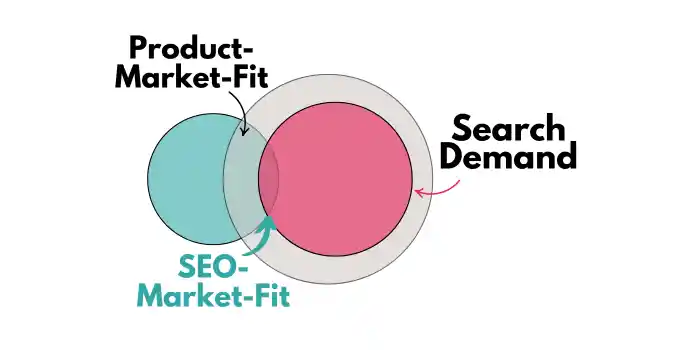
Search market fit is when your product and positioning align with search demand.
If a business doesn’t have product-market fit, they sure as hell don’t have SEO-market fit either.
No PMF = No predictable demand = No SEO market fit
No SEO market fit = Wasted effort chasing keywords that don’t convert
You see, most businesses jump into (or are pushed into) SEO, thinking, If I rank, I’ll get customers.
Nope. First, you need to ask:
- Are people actually searching for what I offer?
- If they are, are they using the terms I think they are?
- If they aren’t searching for it, why not? (Hint: It’s not Google’s fault.)
If the answer to the first question is “no,” then congratulations, you don’t have an SEO problem; you may have a search demand or positioning problem.
If the answer is “yes,” but you’re using the wrong language, you have a messaging problem. And if they’re not searching for it at all, well… you might need to start shaping the demand yourself, but let’s not get ahead of ourselves.
Simply put, SEO only works when:
✅ You have validated your product and messaging
✅ There is an existing search demand for your solution.
✅ You have clear positioning and messaging that aligns with the demand
That is why SEO-Market-Fit is the difference between “We’re ranking for keywords” and “We’re generating revenue from SEO.”
How SEO-Market-Fit Differs for Established Industries Vs. Niche Categories
Imagine spending months optimizing for a keyword nobody searches for. Fun, right? This happens when businesses dive into SEO without considering their SEO market fit.
Generally, the approaches to achieving SEO-market fit for established sectors and niche categories are planets apart (or light years, whatever the kids use these days).
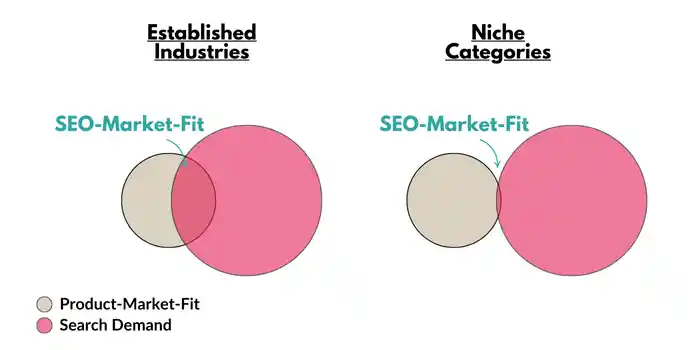
Seo market fit for Established Industries vs Niche Categories
For Established Industries
If you’re in a well-known industry with established search demand (legal services, accountants, SaaS, pet food), the challenge isn’t if SEO will work; it’s how you differentiate.
Your product-market fit is specific to your business, but search demand encompasses competitor offerings, alternative solutions, and broad industry keywords.
Your goal? Capture as big a piece from the search demand pie.
Niche or “Category of One” Businesses
If you’re in a niche or pioneering something new, then kudos, you’ve got a different problem. People aren’t searching for what you do because they don’t even know it exists.
Say you provide AI-powered sleep coaching for dogs; people aren’t searching for it yet. You may have even reached product-market fit and solved the pain for your customers outside of search. But search demand doesn’t, at least not in a way that matches how you’re framing your offer.
If there’s zero search demand, you should invest in brand-building or demand generation (social media, paid ads, partnerships) before even considering SEO.
Making SEO a Strategy, Not a Gamble
SEO isn’t a gamble; it’s a strategy.
If you want your SEO strategy to drive revenue (not just traffic), you must nail SEO market fit first.
You’ve reached SEO Market Fit when:
→ People are already searching for solutions like yours.
→ Your messaging, ICP, and product are stable.
→ You have at least one proven acquisition channel
→ Your sales process converts leads.
So before you sink money into SEO, ask yourself:
- Have I achieved SEO market fit?
- Or am I about to become another case study on how to set money on fire on SEO?
If you’ve realized you might not have SEO Market Fit yet, don’t panic. In next week’s article, I’ll spill the beans on how to engineer SEO Market Fit, so you can turn search into a revenue channel instead of a money pit. Stay tuned.
Meanwhile, do you want a second pair of eyes on whether your business is ready for SEO? Shoot me an InMail with “SMF,” and I’ll send you a quick 3-step SEO Market Fit test.